Blog

  • PC RAM Prices Are Finally Dropping – But Don’t Expect CFexpress Cards to Follow Anytime Soon

    If you’ve been keeping an eye on PC hardware prices lately, you may have spotted a few headlines suggesting that RAM prices are finally softening after a brutal stretch of increases. That’s technically true — but the full picture is far more complicated, and if you’re a photographer or filmmaker relying on CFexpress Type A or Type B cards, the news is considerably less cheerful.

    Here’s what’s really going on, why it matters to pro memory card users, and what you should realistically expect for the rest of 2026.

    How Did We Get Here? The Great Memory Crunch Explained

    To understand where CFexpress prices are heading, you first need to understand the supply chain disaster that’s been unfolding since late 2024.

    The world’s three dominant memory manufacturers – Samsung, SK Hynix, and Micron – produce the overwhelming majority of the DRAM and NAND flash chips that power everything from your gaming PC to your camera’s memory card. And since the AI boom took off in earnest, these companies have been quietly redirecting their production lines away from consumer memory products toward far more profitable chips: specifically, High Bandwidth Memory (HBM) for AI accelerators like Nvidia’s latest GPUs.

    The result has been catastrophic for consumer memory pricing. According to IDC’s February 2026 analysis, this isn’t simply a cyclical supply-demand mismatch – it represents a potentially permanent strategic reallocation of the world’s silicon wafer capacity. Every wafer allocated to an HBM stack for an AI data center is a wafer that won’t become a DDR5 module, an SSD chip, or a CFexpress card. It’s a zero-sum game, and AI is winning.

    The scale of the problem is hard to overstate. Industry analysts at ADATA confirmed in late 2025 that DRAM, NAND, and even hard disk drives are simultaneously in shortage – something not seen in roughly 30 years. TeamGroup’s general manager reported that contract prices for certain DRAM and 3D NAND categories nearly doubled month-over-month in late 2025, with a 16GB DDR5 chip climbing from around $6.84 in September 2025 to over $27 by December – a nearly 300% increase in under three months.

    So Why Are PC RAM Prices “Dropping”?

    The headlines about falling RAM prices deserve some important context. Yes, there have been some spot price fluctuations and limited retail discounts, particularly on older DDR4 stock. But calling this a meaningful downward trend is generous.

    What’s actually happening is that a small amount of legacy inventory is clearing at slightly reduced prices in specific markets, creating isolated pockets of deals. The broader picture remains grim. PC Build Advisor’s analysis of the market showed that a standard 32GB DDR5 kit that sold for around $60-$70 in mid-2025 had spiked to over $240 by early 2026 – and analysts suggest a “new normal” of $100–$120 for 32GB kits is the more realistic long-term landing point, even after eventual stabilization.

    HP disclosed in its Q1 2026 earnings call that memory costs had doubled in a single quarter and now account for 35% of total PC build materials, up from 15–18% the prior quarter. Dell’s COO described the cost escalation as something the company had “never witnessed.” These aren’t the statements of companies navigating a mild blip.

    Relief for PC RAM at scale is now broadly projected for late 2026 at the earliest, with many analysts – including TeamGroup’s general manager – suggesting normalization won’t arrive until 2027 or 2028, when new fabrication facilities in Arizona and Europe are expected to come online.

    What Does This Mean for CFexpress Cards?

    This is where pro shooters need to pay very close attention.

    CFexpress Type A and Type B cards are built on the same high-grade NAND flash technology that powers SSDs, RAM, and enterprise storage – and they’re competing for the same increasingly scarce supply. Unlike consumer-grade SD cards, CFexpress cards require NAND that meets much stricter thermal tolerance and endurance specifications, making them even harder to source as manufacturers prioritize enterprise and AI applications.

    The photography world has already been feeling the consequences. According to analysis from PhotoWorkout, memory card prices have tripled in recent months across the board. A SanDisk 128GB CFexpress Type B card that was a routine purchase a year ago now runs around $150 on Amazon. Larger-capacity CFexpress Type B cards – essential for high-bitrate video and burst RAW shooting on cameras like the Canon EOS R3, Nikon Z9, and Sony A9 III – have more than doubled in price since late 2025, with some 512GB options approaching $400–$500 in certain markets.

    CFexpress Type A cards, used exclusively in Sony’s Alpha mirrorless lineup and some recent Nikon bodies, have followed a similar trajectory. These are not mainstream, high-volume products, which means they have even less negotiating leverage in the supply chain than commodity SD cards.

    The situation came to a head dramatically on March 27, 2026, when Sony announced it was suspending orders for nearly its entire range of memory cards – including CFexpress Type A, CFexpress Type B, and most SDXC/SDHC lines – citing “global semiconductor (memory) shortages.” The company gave no date for when orders would resume. The fact that Sony chose a complete order suspension rather than simply quoting extended lead times tells you everything about the severity of the supply crunch they’re facing.

    TrendForce revised its Q1 2026 NAND Flash price forecast in early 2026 to show a 55–60% quarter-over-quarter increase, with NAND wafer costs rising 25% in February 2026 alone. Phison’s CEO issued a stark warning that NAND shortages could force smaller consumer electronics companies out of the market entirely in 2026 – a scenario that would reduce competition among memory card manufacturers and keep prices elevated for years.

    Will CFexpress Prices Ever Come Down?

    The honest answer: not soon, and not dramatically.

    The underlying supply problem – AI data centers consuming a disproportionate share of global NAND production – is structural, not temporary. Microsoft, Google, Meta, and Amazon have placed what Reuters described as open-ended orders with memory suppliers, indicating they will absorb as much supply as available regardless of cost. This kind of buyer behavior makes it nearly impossible for camera memory card manufacturers to compete.

    New fabrication capacity takes 18 to 24 months to bring online after construction begins. Even the most optimistic projections from industry analysts don’t point to meaningful NAND supply relief until mid-to-late 2027. IDC’s February 2026 report projects 2026 NAND supply growth will come in well below historical norms, at around 17% year-over-year – insufficient to meet demand that is growing far faster.

    There is one potential wildcard: Chinese memory maker CXMT recently raised $4.2 billion in an IPO with plans to expand DRAM and NAND wafer capacity significantly. If CXMT executes, it could introduce new supply into the market as early as late 2026 or 2027, which may begin to ease pressure on commodity memory – potentially including camera cards. But this remains speculative, and geopolitical factors add further uncertainty.

    What Should Filmmakers and Video Creators Do Right Now?

    Given all of this, here’s a practical framework for anyone who shoots professionally or relies on CFexpress cards for their work:

    Buy what you need now. Every piece of supply chain data suggests CFexpress prices will remain elevated or continue rising through 2026. Waiting for a price correction that may not arrive for 18+ months is a risky strategy if you have active shooting commitments.

    Focus on mid-capacity cards. The 128GB–512GB range currently offers the best balance of availability and value. Very large capacity cards (1TB and above) have been hit hardest by the shortage and are increasingly difficult to find at reasonable prices.

    Consider used markets carefully. Used and refurbished CFexpress cards from reputable sellers are one of the few places where pricing hasn’t yet fully caught up to the new reality – but this window is narrowing as awareness of the shortage spreads.

    Don’t assume a “sale” price is the new floor. Some retailers are temporarily discounting stock they’re uncertain about being able to restock. A card listed at a price that seems like a deal in 2026 may simply be old inventory – grab it if you need it.

    The Bigger Picture

    The global memory crunch is a genuinely unprecedented event in the modern electronics era. For the first time in roughly three decades, DRAM, NAND, and hard drives are simultaneously constrained. AI infrastructure has fundamentally redirected the supply chain in ways that will take years to fully unwind – and pro camera media sits near the bottom of the priority list for major memory manufacturers.

    For photographers and filmmakers, the implication is clear: the era of cheap, abundantly available CFexpress cards is over for now. Plan your kit accordingly, buy what you need before prices climb further, and watch the NAND supply news closely for any sign that new fabrication capacity is coming online ahead of schedule.

    ProCardPrices.com will continue tracking CFexpress Type A and Type B card prices daily so you always know where the market stands.

    Sources: IDC Global Memory Shortage Analysis (Feb 2026), Tom’s Hardware, TrendForce, Canon Rumors, PhotoWorkout, heise online, Wikipedia global memory shortage article, PC Build Advisor
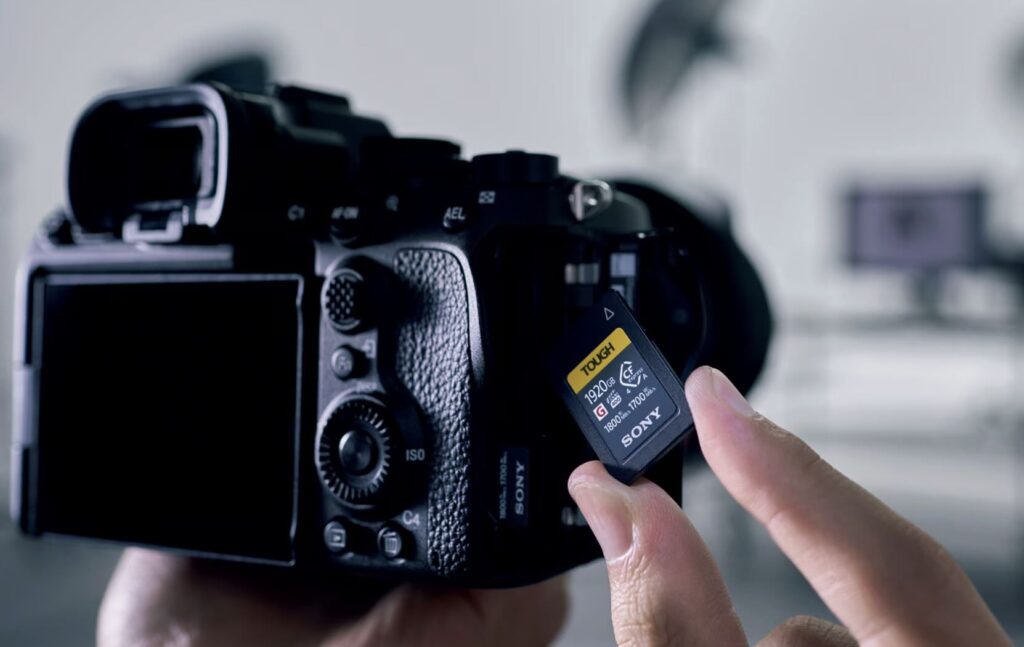
  • Sony CFexpress Type A, Type B & SD Cards Unavailable Due to Global Semiconductor Shortage (2026)

    Sony has suspended orders for its entire range of CFexpress Type A, CFexpress Type B, and SD memory cards as of March 27, 2026. The Sony memory card shortage is the direct result of the ongoing global semiconductor shortage, and the company has confirmed that supply cannot currently meet demand. No resumption date has been announced.

    Sony CFexpress Type A memory card CEA-G out of stock 2026

    Which Sony Memory Cards Are Affected?

    The following Sony memory cards are no longer available to order from retailers or authorised dealers until further notice:

    CFexpress Type A

    • CEA-G1920T
    • CEA-G960T
    • CEA-G480T
    • CEA-G240T

    CFexpress Type B

    • CEB-G480T
    • CEB-G240T

    SDXC / SDHC

    • SF-G256T
    • SF-G128T
    • SF-G64T
    • SF-M512T
    • SF-M256T
    • SF-M128T
    • SF-E256
    • SF-E128A
    • SF-E64A

    That covers Sony’s full professional memory card lineup — every CFexpress and SD card the company currently sells.

    Why Are Sony Memory Cards Out of Stock?

    Sony Marketing Inc. issued an official statement attributing the suspension directly to the global chip supply crisis:

    “Due to the global shortage of semiconductors and other factors, we anticipate that the situation where supply cannot meet demand will continue.”

    The semiconductor shortage has disrupted manufacturing across the consumer electronics industry since the early 2020s, and its effects on high-performance storage components — which rely on advanced NAND flash controller chips — remain acute in 2026. Sony is not the only memory card manufacturer facing supply constraints, but the suspension of its entire product line makes this a significant event for camera users worldwide.

    What Does This Mean for Photographers and Videographers?

    For Sony shooters, the impact is immediate. CFexpress Type A is the native card format for Sony’s most popular professional cameras including the A7R V, A7 IV, A1, Sony FX3, and FX6 – making it the single most critical storage medium for that ecosystem. CFexpress Type B is used in higher-capacity workflows.

    With new stock unavailable through authorised channels, professionals who rely on Sony cards should:

    • Buy remaining stock now from reputable retailers while supplies last
    • Avoid grey-market sources which may sell counterfeit or substandard cards
    • Monitor Sony’s official product pages for the earliest news of restocking

    When Will Sony Memory Cards Be Available Again?

    Sony has not given a specific date. The company stated it will “monitor supply conditions” and post updates directly to individual product information pages when orders resume. There is no confirmed timeline.

    Frequently Asked Questions

    Which Sony CFexpress Type A cards are out of stock?
    All four models – CEA-G1920T, CEA-G960T, CEA-G480T, and CEA-G240T – have had orders suspended as of March 27, 2026.

    Are Sony SD cards also affected by the shortage?
    Yes. Nine SDXC/SDHC models across the SF-G, SF-M, and SF-E lines are included in the suspension.

    Has Sony discontinued these memory cards permanently?
    No. Sony has described this as a supply suspension, not a discontinuation. The company intends to resume orders when semiconductor supply improves.

    Will Sony resume selling memory cards soon?
    Sony has not committed to a date. Updates will appear on Sony’s product pages when the situation changes.

    What are the best alternatives to Sony CFexpress Type A cards?
    Prograde Digital and Angelbird both manufacture CFexpress Type A cards compatible with Sony cameras, and may be worth considering while Sony stock remains unavailable.


    Source: Sony Marketing Inc. official announcement, March 27, 2026. Check Sony’s official product pages for the latest availability updates.

  • Cheap CFexpress A Cards: 7 Powerful Truths Every Video Creator Must Know

    Cheap CFexpress A Cards: 7 Powerful Truths Every Video Creator Must Know

    If you’re a video creator or cinematographer, you’ve probably noticed the rising popularity of Cheap CFexpress A cards. But here’s the real question – do cheaper cards actually compromise your footage, or are they a smart way to save money?

    In this guide, we’ll break down everything you need to know – from how these cards work to whether budget options are reliable for professional video workflows.

    What Are CFexpress Type A Cards?

    CFexpress Type A cards are next-generation memory cards designed for high-speed data transfer, especially in modern cameras that shoot high-resolution video and burst photography.

    The Evolution from SD and XQD Cards

    For years, SD cards dominated the market. However, as cameras began shooting 4K, 6K, and even 8K video, SD cards struggled to keep up with the required write speeds.

    CFexpress cards, especially Type A variants, emerged as a compact yet powerful solution. They bridge the gap between performance and portability.

    CFexpress Type A vs Type B Explained

    • Type A: Smaller, used mainly in Sony cameras (example – Sony a7S III, Sony FX3, Sony FX2)
    • Type B: Larger, faster, more common in cinema cameras (example: Sony FX6)

    Type A cards are ideal for hybrid shooters who need speed without bulk.

    How CFexpress A Cards Work

    Understanding how these cards function helps explain why pricing varies so much.

    PCIe Interface and NVMe Protocol

    CFexpress cards use:

    • PCIe (Peripheral Component Interconnect Express)
    • NVMe (Non-Volatile Memory Express)

    This combo allows extremely fast data transfer—similar to high-end SSDs.

    Speed Ratings and Real-World Performance

    Manufacturers often advertise:

    • Maximum read speeds
    • Maximum write speeds

    But in real-world video recording, sustained write speed matters far more.

    Why CFexpress A Cards Matter for Video Creators

    High Bitrate Video Recording Needs

    Modern codecs like:

    • All-I 4K 10bit 4:2:2 subsampling – excellent for color grading in post; also broadcast compliant codec.
    • ProRes (external), also 10bit codec.
    • XAVC S-I (10bit)

    …require consistent data throughput. If your card can’t keep up, recording may stop.

    Buffer Clearing and Continuous Shooting

    Photographers also benefit:

    • Faster burst shooting
    • Quicker buffer clearing
    • Reduced downtime between shots

    Cheap CFexpress A Cards: What Does “Cheap” Really Mean?

    Not all “cheap” cards are bad—but the term can be misleading.

    Price vs Performance Factors

    Lower cost usually means:

    • Slower sustained speeds
    • Less thermal management
    • Lower-grade NAND memory

    Brand vs Generic Cards

    Established brands invest in:

    • Firmware optimization
    • Quality control
    • Heat dissipation

    Generic brands often cut corners here.

    Do Cheap CFexpress A Cards Affect Video Quality?

    Here’s the key truth: they don’t directly affect image quality—but they can affect recording reliability.

    Bitrate Stability and Dropped Frames

    If a card can’t sustain required speeds:

    • Recording may stop
    • Frames may drop
    • Files may corrupt

    Overheating and Thermal Throttling

    Cheap cards are more prone to:

    • Overheating
    • Speed throttling during long takes

    This is critical for interviews or continuous recording.

    When Cheap CFexpress A Cards Are Good Enough

    Low to Mid Bitrate Recording

    Cheap cards work well for:

    • 4K Long GOP
    • Standard frame rates (24–30fps)

    Backup or Secondary Storage

    They’re perfect as:

    • Backup cards
    • B-roll storage
    • Non-critical shoots

    When You Should Avoid Cheap CFexpress A Cards

    Professional Cinema Workflows

    Avoid budget cards when:

    • Shooting paid projects
    • Working with clients
    • Capturing once-in-a-lifetime events

    High Frame Rate and RAW Recording

    High-end formats demand:

    • Consistent write speeds
    • Zero tolerance for failure

    Cheap cards often fall short here.

    Comparing Cheap vs Expensive CFexpress A Cards

    Speed Benchmarks

    FeatureCheap CardsPremium Cards
    Sustained Write SpeedLowerHigh & stable
    Burst PerformanceInconsistentReliable
    Heat ManagementLimitedAdvanced

    Reliability and Longevity

    Premium cards:

    • Last longer
    • Have better error correction
    • Offer warranties

    Cheap cards may degrade faster under heavy use.

    Best Use Cases for CFexpress A Cards

    Sony Alpha Cameras

    Popular models include:

    • A7S III
    • FX3
    • FX6

    These cameras rely heavily on CFexpress Type A for peak performance.

    Hybrid Photo/Video Shooters

    If you shoot both:

    • Photos + video
    • Weddings + events

    CFexpress A offers flexibility and speed.

    Key Features to Look for When Buying

    Sustained Write Speed

    Always prioritize:

    • Minimum sustained write speed over advertised peak speed.

    VPG Ratings and Certifications

    Look for:

    • VPG (Video Performance Guarantee)
      • VPG-400 is the latest and most commonly used among professionals. This simply means, the card is guaranteed to sustain recording speeds of 400 MB/sec., enough for 10bit 4K/120fps, 6K, and even 8K.
      • VPG-200 is 200MB/sec. sustained write speed, which is acceptable for 1080p and 4K (non-RAW) material.
    • Manufacturer-tested compatibility

    Common Mistakes Buyers Make

    Confusing Peak vs Sustained Speeds

    Peak speed is marketing—sustained speed is reality.

    Ignoring Firmware Compatibility

    Always ensure:

    • Your camera supports the card fully
    • Firmware is up to date

    Tips to Maximize CFexpress A Card Performance

    Proper Formatting Techniques

    • Format cards in-camera
    • Avoid computer formatting when possible

    Storage and Handling Best Practices

    • Keep cards cool
    • Avoid physical damage
    • Use protective cases

    Future of CFexpress A Technology

    Upcoming Speed Improvements

    Expect:

    • Faster PCIe lanes
    • Higher capacities
    • Better thermal control

    Market Trends and Pricing

    As adoption increases:

    • Prices will drop
    • Cheap options will improve in quality

    FAQs About Cheap CFexpress A Cards

    1. Are Cheap CFexpress A cards safe to use?

    Yes, but only for non-critical work or lower bitrate recording.

    2. Can cheap cards damage my camera?

    No, but unreliable cards can cause recording failures.

    3. Do expensive cards improve video quality?

    No, they improve reliability—not image quality.

    4. What’s the minimum speed I should look for?

    At least 400–700 MB/s sustained write speed for high-end video.

    5. Are cheap cards good for 4K video?

    Yes, if you’re shooting compressed formats like Long GOP.

    6. How long do CFexpress A cards last?

    Premium cards last longer due to better NAND and wear levelling.

    Conclusion

    Cheap CFexpress A cards can be a smart investment—but only if you understand their limitations.

    For casual shooting or backup use, they’re perfectly fine. But for professional video production, reliability is everything. Dropped frames or failed recordings can cost far more than the savings from a cheaper card.

    In short:

    • Use cheap cards strategically
    • Invest in premium cards when it matters most

    That balance is what separates amateurs from seasoned professionals.

    🔗 External Resource

    Learn more about CFexpress standards here: https://compactflash.org/

  • Best CFexpress Type A Cards for Sony FX3, Sony FX30, Sony FX6 and A7S III Cameras


    Introduction to CFexpress Type A Cards

    The Best CFexpress Type A Cards for Sony FX3, Sony FX30, Sony FX6 and A7S III cameras are essential tools for modern filmmakers and content creators. These compact yet powerful storage devices are designed to handle high-bitrate video formats like 4K All-Intra and even RAW recording.

    Unlike traditional SD cards, CFexpress Type A cards deliver blazing-fast speeds and unmatched reliability. That’s why Sony’s cinema and hybrid cameras rely heavily on them for professional workflows.

    What Makes CFexpress Type A Unique

    CFexpress Type A cards use PCIe Gen3 and NVMe interfaces, which allow significantly faster data transfer than SD cards. They’re smaller than Type B cards but still pack serious performance.

    Key advantages of CFexpress Type A cards  include:

    • Ultra-fast write speeds for high-bitrate video
    • Low latency for continuous shooting
    • Improved heat management

    Why Sony Cameras Depend on Them

    Sony cameras like the FX3 and A7S III push massive amounts of data when recording in XAVC S-I or S&Q modes. Without a high-performance card, you risk dropped frames or recording failure.

    Choosing the right memory card isn’t just about storage—it directly affects your shooting experience.

    Impact on Video Recording

    High-end codecs like:

    • XAVC S-I (All-Intra)
    • 4K 120fps
    • 10-bit 4:2:2

    require sustained write speeds in order to maintain correct writing of video data on the card. The wrong card can cause:

    • Recording interruptions
    • Overheating issues
    • File corruption

    Fast read speeds mean:

    • Quicker file transfers
    • Faster editing turnaround
    • Less downtime on set

    Key Features to Look for in CFexpress Type A Cards


    Read and Write Speeds – What to look for:

    • Write speeds above 700 MB/s
    • Read speeds near 800 MB/s or higher

    💾 Capacity Options

    Common sizes include:

    • 80GB (entry-level)
    • 160GB (balanced)
    • 320GB+ (professional use)

    🛡️ Durability and Build Quality

    Top cards offer:

    • X-ray protection
    • Shock resistance
    • Temperature resistance

    Performance and Speed

    Sony’s own TOUGH G Series is engineered specifically for its cameras. It delivers:

    • Write speeds up to 700 MB/s
    • Read speeds up to 800 MB/s

    This ensures flawless recording for demanding formats like 4K 120fps.

    ✅ Pros and Cons

    Pros:

    • Native Sony compatibility
    • Exceptional durability
    • Stable sustained speeds

    Cons:

    • Higher price point
    • Limited capacity options compared to competitors


    🥇 Lexar Professional GOLD Series CFexpress Type A
    Key Specifications

    Lexar GOLD cards are known for balancing performance and value:

    • Write speeds up to 700 MB/s
    • Read speeds up to 900 MB/s

    🎯 Best Use Cases

    Ideal for:

    • Content creators needing reliability without overspending
    • Hybrid shooters (photo + video)
    • Mid-budget filmmakers
    • Content creators needing reliability without overspending


    🚀 ProGrade Digital CFexpress Type A 4.0 Memory Card (Iridium)

     Advanced Features

    The Iridium series is built for professionals:

    • Next-gen performance architecture
    • Optimized sustained write speeds
    • Rigorous quality control testing

    🎥 Reliability in Production

    ProGrade cards are widely trusted in film production environments due to:

    • Consistent performance
    • Thermal efficiency
    • Firmware optimization tools

    Compatibility with Sony FX3, FX30, FX6, and A7S III

    All three cards fully support:

    • XAVC S-I recording
    • 4K 120fps
    • Slow & Quick motion modes

    📦 Supported Formats and Bitrates

    CameraMax BitrateCard Requirement
    FX3600 MbpsCFexpress Type A
    FX30600 MbpsCFexpress Type A
    FX6600+ MbpsCFexpress Type A
    A7S III600 MbpsCFexpress Type A

    ⚖️ CFexpress Type A vs SD Cards

    ⚡ Speed Comparison

    TypeMax Speed
    SD UHS-II~300 MB/s
    CFexpress Type A~800+ MB/s

    When to Use Each

    Use CFexpress when:

    • Shooting high-bitrate video
    • Recording long sessions

    Use SD cards when:

    • Shooting photos
    • Recording lower bitrate video

     Real-World Performance Comparison

    🎬 Video Recording Tests

    All three cards handle:

    • 4K All-Intra without drops
    • Long continuous recording

    📤 Data Transfer Speed

    Lexar and ProGrade often edge slightly ahead in read speeds, making offloading faster.

    How to Choose the Best CFexpress Type A Card

    💰 Budget vs Performance

    • Premium: Sony TOUGH
    • Mid-range: Lexar GOLD
    • Pro performance: ProGrade Iridium

    👤 Professional vs Hobby Use

    • Professionals → ProGrade or Sony
    • Creators → Lexar

    Storage Recommendations for Different Shooters

    🎥 Filmmakers

    Go for:

    • 160GB or higher
    • Multiple cards for redundancy

    📱 Content Creators

    • 80GB–160GB is sufficient
    • Focus on value and speed balance

    Maintenance Tips for CFexpress Cards

    🧼 Proper Handling

    • Avoid extreme heat
    • Store in protective cases

    🔄 Formatting and Backup

    • Format in-camera
    • Backup footage immediately

    Common Mistakes to Avoid

    • Using SD cards for high bitrate modes
    • Buying low-speed CFexpress cards
    • Ignoring firmware updates

    FAQs

    1. Are CFexpress Type A cards required for Sony FX3?

    Yes, for high-bitrate formats like 4K All-Intra, CFexpress Type A cards are necessary.

    2. Can I use SD cards instead?

    Yes, but only for lower bitrate recording modes.

    3. Which brand is most reliable?

    Sony, Lexar, and ProGrade are all highly reliable, with Sony offering the best compatibility.

    4. What capacity should I choose?

    160GB is a safe starting point for most users.

    5. Do CFexpress cards overheat?

    High-quality cards are designed to manage heat efficiently.

    6. Are ProGrade Iridium cards worth it?

    Yes, especially for professional filmmakers needing consistent performance.

    Conclusion

    Choosing the Best CFexpress Type A Cards for Sony FX3, Sony FX30, Sony FX6 and A7S III cameras can dramatically improve your shooting experience. Whether you prioritize durability, speed, or value, Sony TOUGH, Lexar GOLD, and ProGrade Iridium all deliver exceptional performance.

    Investing in the right card ensures:

    • Smooth recording
    • Faster workflows
    • Peace of mind on set
  • CFexpress A vs B memory cards: What’s the difference? (non-tech version)


    If you’ve been diving into modern mirrorless or cinema cameras, you’ve probably come across CFexpress Type A and Type B memory cards. They sound similar, but choosing the right one can seriously impact your workflow especially if you shoot high-resolution video or burst photography.

    Let’s break it down in a clear, practical way so you can confidently decide what fits your needs.

    What Are CFexpress Cards, Anyway?

    CFexpress cards are the next generation of high-speed storage, built for today’s demanding cameras. Compared to older formats like SD cards, they offer:

    • Greater reliability for professional use
    • Much faster read/write speeds
    • Smooth handling of 4K, 6K, and 8K video

    The two main types: CFexpress Type A and CFexpress Type B – serve different needs depending on your camera and shooting style.

    cfexpress-type-a-card-vs-type-b-memory-cards. OWC, Lexar Professional CFexpress A, CFexpress B memory cards.

    CFexpress Type A: Compact and Efficient

    CFexpress Type A cards are small, lightweight, and efficient, making them ideal for compact professional cameras.

    Cameras that use Type A:

    • Sony FX3
    • Sony A7S III
    • Other select Sony Alpha cameras

    These mirrorless cameras are popular with videographers and hybrid creators, so Type A cards are designed to keep up without adding bulk.

    Key benefits:

    • Compact size: Keeps camera bodies smaller and lighter
    • Lower power draw: Helps extend battery life during long shoots
    • Reliable performance: Handles high-quality 4K and compressed RAW video

    Popular manufacturers:

    • Sony
    • SanDisk
    • Lexar
    • ProGrade Digital
    • Delkin Devices

    The trade-offs:

    • Slower than Type B (but still very fast)
    • Higher cost per gigabyte

    The bottom line: Type A is perfect for creators who want portability without sacrificing performance.

    CFexpress Type B memory card Sony Tough 1920GB on Sony BURANO.
    CFexpress Type B memory card model – Sony TOUGH 1920GB on Sony BURANO.


    CFexpress Type B: Built for Speed and Heavy Workloads

    When it comes to their physical footprint and the speed of moving video data, CFexpress Type B cards are larger and significantly faster, designed for demanding production environments.

    Cameras that use Type B:

    • Sony BURANO
    • Canon EOS C400
    • Many Canon, Nikon, and cinema cameras

    These are tools used by cinematographers and high-end content creators who need maximum performance.

    Key benefits:

    • Ultra-fast speeds: Ideal for 6K/8K and RAW video
    • Excellent for burst shooting: No buffering delays
    • Wider adoption: Supported across many professional systems

    Popular manufacturers:

    • SanDisk
    • Lexar
    • ProGrade Digital
    • Delkin Devices
    • Sony

    The trade-offs:

    • Larger physical size
    • Higher power consumption
    • Not compatible with Type A slots

    Here’s the Bottom line: Type B is built for serious workloads where speed and reliability are critical.

    Key Differences at a Glance

    FeatureCFexpress Type ACFexpress Type B
    SizeSmaller, compactLarger
    SpeedFastExtremely fast
    Best ForHybrid creatorsCinema & high-end production
    Power UsageLowerHigher
    Cost per GBHigherMore affordable
    Camera ExamplesSony FX3, Sony A7S IIISony BURANO, Canon EOS C400
    Brand AvailabilitySony, SanDisk, Lexar, ProGrade, DelkinSanDisk, Lexar, ProGrade, Delkin, Sony

    Which One Should You Choose?

    Choose CFexpress Type A if:

    • You shoot with cameras like the Sony FX3 or A7S III
    • You want a lightweight, compact setup
    • You’re focused on hybrid shooting (photo + video)

    You Should Choose CFexpress Type B if:

    • You use cinema cameras like the Sony BURANO or Canon EOS C400
    • You shoot RAW video, 6K/8K, or high frame rates
    • You need maximum speed and buffer performance

    Have a browse throughout our growing catalogue of the most popular CFexpress Type A, and CFexpress Type B cards and see the latest live prices from major retailers such as B&H and Amazon.

    A Practical Insight Most Beginners Overlook

    Your memory card doesn’t improve image quality—it ensures your camera can record data without interruption.

    If your card is too slow:

    • Video may stop recording
    • Frames may drop
    • Burst shooting may slow down

    That’s why professionals trust brands like SanDisk, Lexar, ProGrade Digital, Delkin, and Sony—they’re known for consistent, reliable performance under pressure.

    Final Thoughts

    CFexpress Type A and Type B cards aren’t competitors—they’re tools designed for different workflows.

    • Type A is all about balance: compact, efficient, and powerful enough for most creators
    • Type B is about performance: built for demanding, high-end production

    The smartest choice? Match your card to your camera and shooting style. Once you do, your workflow becomes smoother, faster, and far more reliable.

  • Blackmagic Design Announces Cloud Pricing Update as Flash and RAM Costs Rise

    Blackmagic Design Issues New Cloud Pricing Update

    Blackmagic Design has announced another Cloud Pricing Update, stating that it has again increased the price of Blackmagic Cloud Stores and some other products that rely on flash and RAM memory. In its official post on X, the company said the increase was made reluctantly and advised customers to check its website for current pricing.


    For professional photographers, videographers, cinematographers, editors, and production teams, this is more than a routine pricing change. It is a direct signal that the storage hardware market remains under serious pressure.

    Why Blackmagic Cloud Store Pricing Is Increasing

    Blackmagic’s Cloud Store lineup uses high-speed flash storage, with the company’s product page highlighting internal M.2 flash memory and RAID-based designs for collaborative media workflows. That makes these systems especially exposed to swings in flash and memory pricing.


    Blackmagic Cloud Store products are not niche accessories, thus the rising cost of components affects the price consumers pay at the till. These products are workflow infrastructure for teams handling multi-camera shoots, shared post-production, remote collaboration, and high-bandwidth media access.

    NAND Flash Prices Are Hitting SSDs and Media Hard


    The bigger story is the supply chain behind the announcement. TrendForce reported in February 2026 that NAND Flash contract prices were expected to rise 55% to 60% quarter over quarter, with the possibility of further upward revisions. TrendForce also noted that flash supply has tightened significantly in 2026, pushing prices sharply higher.


    That surge is already flowing through to the tools creatives actually buy. Tom’s Hardware recently reported severe pressure on SSD pricing, describing NAND flash prices as having “skyrocketed,” while separate coverage cited wafer costs jumping 25% in a single month and industry executives warning of shortages and rapid price increases. 


    For camera professionals, that has obvious consequences. Camera professionals spend a significant amount of investment in SSDs, removable media, on-set storage, backup systems, and shared storage appliances. Rising memory prices will affect all of them. As it will the broader storage ecosystem. that powers capture, transfer, edit, and archive workflows. That is a market inference based on how these products depend on the same core flash supply chain.

    What This Means for Video and Photo Professionals

    The takeaway is simple: this is not just a Blackmagic pricing story. It is a broader storage market correction that is now reaching production and post-production gear.

    For professionals planning storage upgrades, expanding collaborative workflows, or budgeting for new media infrastructure, delaying purchases may not lead to lower prices in the near term. Blackmagic Design’s latest update is another clear indication that flash and RAM inflation is now materially affecting professional imaging and video workflows.